 Image 1 of 4
 Image 2 of 4
 Image 3 of 4
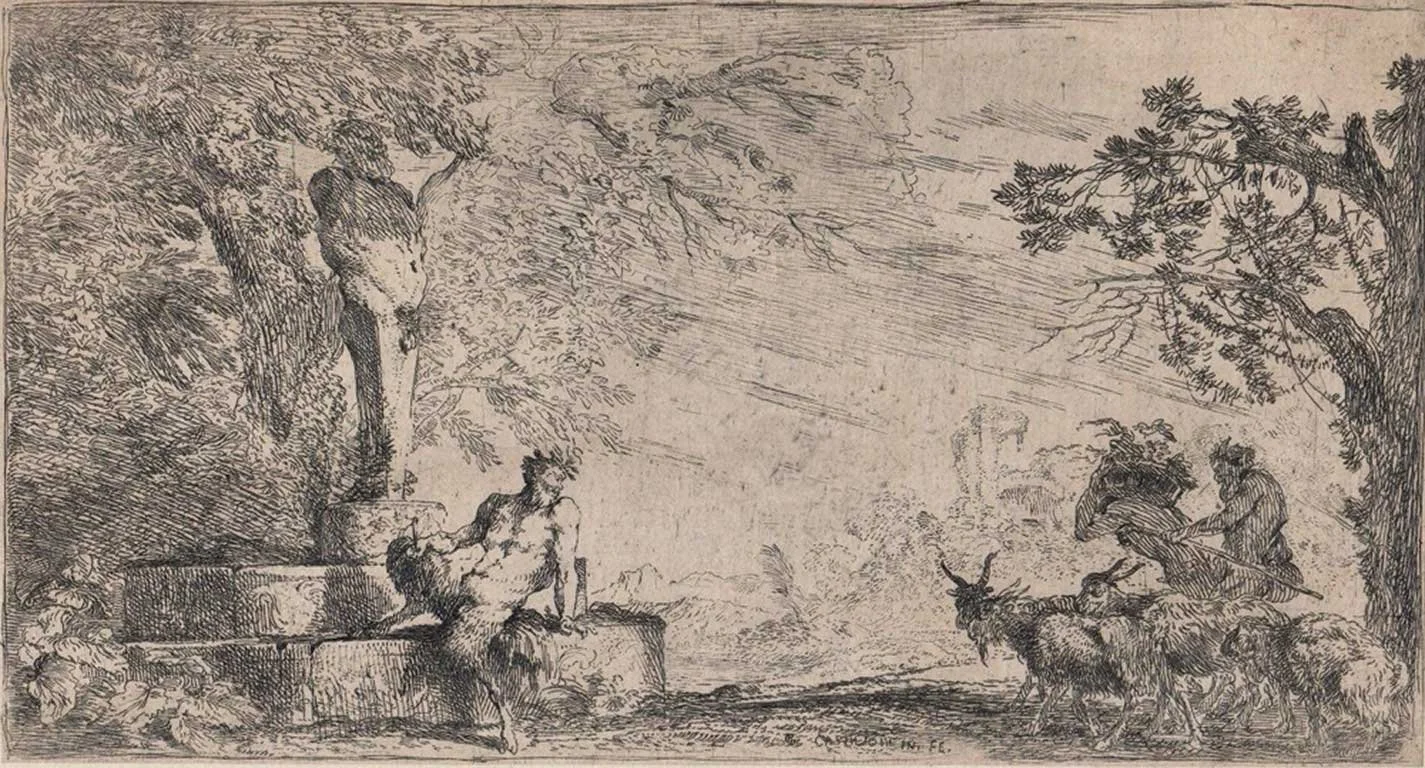 Image 4 of 4
Artist: Giovanni Benedetto Castiglione (Italian 1609 - 1664) Attributed.
Title: A Sacrifice to Priapus.
Medium: Oil on canvas.
Framed Size: Height 48 cm x Width 64 cm x Depth 9.5 cm.
Image Size: Height 26 cm x Width 43 cm.
Condition: Fair to good condition. The work presents well, although the paint is thin in areas. The work has been relined. Appears to be the original stretcher with possibly a later frame.
Provenance:
Sale:
- Country Estate Sale Sussex. Auction by Burstow and Hewett, East Sussex, England,
October 2017. Lot 7 Catalogue attribution to Giovanni Benedetto Castiglione.
- Purchased by Wright Gallery Fine Art.
Note: The vendor was a prominent estate in the surrounding area, and the painting had been held within the family collection for an extensive but unknown period.
Sale:
- A Gentleman in Manchester (Mr Harris). Auction by Winstanley, Assembly Room, Exchange Street, Manchester, England, on June 5th 1807, Lot 42. Titled: “Sacrifice to Priapus”
Note: Importantly, the catalogue entry states that the painting has been etched by the artist and notably details the dimensions of the work as 1” 1” 10”. There appears to have been a clerical error in the transcription of the dimensions of the painting. It would appear that the measurements are Depth x Height x Width. Our paintings' dimensions in inches are 1” x 16’’ x 10’’, which fits with the published dimensions, allowing for a typographical error, being the omission of the figure 6, as it obviously was not 1” inch.
Sale:
- Phillips de Flines (Textile Trader). Auction by Oossaan (Aart Dircksz) Amsterdam, April 20th 1700. Lot 8.
- The sale consisted of 104 painting lots as well as 42 other antiquities. Lot 61 and Lot 8 within the same sale both correspond to the following title “Een Offerhande voor Priapus, van Benedetto Castiglione” which translates as “An Offer for Priapus, from Benedetto Castiglione. Or An Sacrifice for Priapus”.
Note: The title of the painting is the same as that sold in Manchester in 1807. Unfortunately, the dimensions are not listed in the catalogue. The painting is probably Lot 8, as the sale result was 500 FL, equivalent to around 9,000 USD today, compared to Lot 61 being the etching at 22 FL, around $400 US today, prints being the more affordable acquisition.
Sale:
- Henry Howard, 6th Duke of Arundel. Unknown Auction House Amsterdam, 9th of September 1684. Lot 2.
Note: Lot 2 Giovanni Benedetto Castiglione, titled “A Sacrifice to Priapus with many images, done curiously”, sold for 54 Guilders, approximately $900 US in today’s currency. The translation of the title is slightly varied in contrast to previous sales. However, there is a consistency of title linking the sales between the 1684 Henry Howard sale to the Estate of Phillips de Flines in 1700.
Attribution: In conjunction with the listed provenance that documents this work to be by Giovanni Benedetto Castiglione at a sale only 20 years after his death. The Castiglione Scholar, Mr Timothy Standring, believes that this work is from the studio of Castiglione and is either by Giovanni Benedetto Castiglione or his brother Salvatore Castiglione. We would like to thank Mr Timothy Standring, for opinion of this work. Mr Standring is a world-renowned Giovanni Benedetto Castiglione scholar.
About: Between 1645–48, Castiglione created a series of prints, one of which is entitled “A Satyr reclining at the foot of a statue of Priapus, with goats at the right”. Etched in Castiglione’s native Genoa, the concentration on a mythological subject in a large, lush landscape shows the influence of the French painter Nicolas Poussin, whom the artist possibly met while working in Rome in the 1630s.
This painting is of the same scene, and it appears to be almost identical, bar a few minor details. Up until recent years, Giovanni Benedetto Castiglione has not been at the forefront of art historical research, and there are still questions to be asked in relation to his practice and process. It appears unclear as to whether he created etchings from his paintings or vice versa. It is, however, noted that he pioneered the development of the oil sketch (often using a mixture of mediums). He often returned to the same subjects over again, merely altering aspects of the compositions each time. This work is possibly an oil sketch that was later transcribed into an etching.
Giovanni Benedetto Castiglione was a Baroque Genius of the Genoese school. He was known as a painter, printmaker and draughtsman. Castiglione is also credited with being the inventor of monotype printing. He was also often known by the name Il Grechetto in Italy and Le Benédette in France. Castiglione was also known for his historical subject matter as well as his references to mythological themes. He often combined his love of depicting animals and rural scenes to portray a biblical reference, namely the parable of Noah’s Ark. Castiglione was a superb draughtsman, well-trained, possibly by the likes of Anthony van Dyck and Peter Paul Rubens. However, this is unconfirmed as the early records of Castiglione are somewhat unclear.
Artist: Giovanni Benedetto Castiglione (Italian 1609 - 1664) Attributed.
Title: A Sacrifice to Priapus.
Medium: Oil on canvas.
Framed Size: Height 48 cm x Width 64 cm x Depth 9.5 cm.
Image Size: Height 26 cm x Width 43 cm.
Condition: Fair to good condition. The work presents well, although the paint is thin in areas. The work has been relined. Appears to be the original stretcher with possibly a later frame.
Provenance:
Sale:
- Country Estate Sale Sussex. Auction by Burstow and Hewett, East Sussex, England,
October 2017. Lot 7 Catalogue attribution to Giovanni Benedetto Castiglione.
- Purchased by Wright Gallery Fine Art.
Note: The vendor was a prominent estate in the surrounding area, and the painting had been held within the family collection for an extensive but unknown period.
Sale:
- A Gentleman in Manchester (Mr Harris). Auction by Winstanley, Assembly Room, Exchange Street, Manchester, England, on June 5th 1807, Lot 42. Titled: “Sacrifice to Priapus”
Note: Importantly, the catalogue entry states that the painting has been etched by the artist and notably details the dimensions of the work as 1” 1” 10”. There appears to have been a clerical error in the transcription of the dimensions of the painting. It would appear that the measurements are Depth x Height x Width. Our paintings' dimensions in inches are 1” x 16’’ x 10’’, which fits with the published dimensions, allowing for a typographical error, being the omission of the figure 6, as it obviously was not 1” inch.
Sale:
- Phillips de Flines (Textile Trader). Auction by Oossaan (Aart Dircksz) Amsterdam, April 20th 1700. Lot 8.
- The sale consisted of 104 painting lots as well as 42 other antiquities. Lot 61 and Lot 8 within the same sale both correspond to the following title “Een Offerhande voor Priapus, van Benedetto Castiglione” which translates as “An Offer for Priapus, from Benedetto Castiglione. Or An Sacrifice for Priapus”.
Note: The title of the painting is the same as that sold in Manchester in 1807. Unfortunately, the dimensions are not listed in the catalogue. The painting is probably Lot 8, as the sale result was 500 FL, equivalent to around 9,000 USD today, compared to Lot 61 being the etching at 22 FL, around $400 US today, prints being the more affordable acquisition.
Sale:
- Henry Howard, 6th Duke of Arundel. Unknown Auction House Amsterdam, 9th of September 1684. Lot 2.
Note: Lot 2 Giovanni Benedetto Castiglione, titled “A Sacrifice to Priapus with many images, done curiously”, sold for 54 Guilders, approximately $900 US in today’s currency. The translation of the title is slightly varied in contrast to previous sales. However, there is a consistency of title linking the sales between the 1684 Henry Howard sale to the Estate of Phillips de Flines in 1700.
Attribution: In conjunction with the listed provenance that documents this work to be by Giovanni Benedetto Castiglione at a sale only 20 years after his death. The Castiglione Scholar, Mr Timothy Standring, believes that this work is from the studio of Castiglione and is either by Giovanni Benedetto Castiglione or his brother Salvatore Castiglione. We would like to thank Mr Timothy Standring, for opinion of this work. Mr Standring is a world-renowned Giovanni Benedetto Castiglione scholar.
About: Between 1645–48, Castiglione created a series of prints, one of which is entitled “A Satyr reclining at the foot of a statue of Priapus, with goats at the right”. Etched in Castiglione’s native Genoa, the concentration on a mythological subject in a large, lush landscape shows the influence of the French painter Nicolas Poussin, whom the artist possibly met while working in Rome in the 1630s.
This painting is of the same scene, and it appears to be almost identical, bar a few minor details. Up until recent years, Giovanni Benedetto Castiglione has not been at the forefront of art historical research, and there are still questions to be asked in relation to his practice and process. It appears unclear as to whether he created etchings from his paintings or vice versa. It is, however, noted that he pioneered the development of the oil sketch (often using a mixture of mediums). He often returned to the same subjects over again, merely altering aspects of the compositions each time. This work is possibly an oil sketch that was later transcribed into an etching.
Giovanni Benedetto Castiglione was a Baroque Genius of the Genoese school. He was known as a painter, printmaker and draughtsman. Castiglione is also credited with being the inventor of monotype printing. He was also often known by the name Il Grechetto in Italy and Le Benédette in France. Castiglione was also known for his historical subject matter as well as his references to mythological themes. He often combined his love of depicting animals and rural scenes to portray a biblical reference, namely the parable of Noah’s Ark. Castiglione was a superb draughtsman, well-trained, possibly by the likes of Anthony van Dyck and Peter Paul Rubens. However, this is unconfirmed as the early records of Castiglione are somewhat unclear.